
EU CLP Labeling Example Interpretation
The CLP label is the European Union's label for classifying and labeling chemicals to provide important information about the hazards and safe use of chemicals to ensure consumer safety.
The label should be securely affixed to one or more surfaces of the package and must include the following:
a. The name, address and telephone number of the supplier;
b. Nominal quantity (net content): A product identifier for the nominal quantity of a substance or mixture in a package that is available to the public:
c. means details of the substance or mixture that can be identified;
(Demonstrate the corresponding product identifier using the name and identifier of the substance or mixture provided in CLP Annex VI, Part 3, based on the actual test results of MSDS-Chemical.
d. Hazard pictograms, cautionary signals, hazard statements, precautionary statements and supplementary information
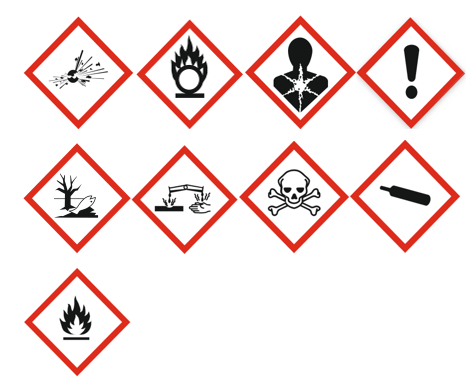
i. Hazard pictograms (examples of common hazard pictograms are listed below)
ii. Warning language signals: used to indicate the seriousness of the danger, e.g. Warning or Danger.
iii. Hazard statement: a brief description of the hazards of the chemical (to be described as required by the regulations);
iv. precautionary statements: measures to prevent or minimize adverse effects on human health or the environment
v. Supplementary Information: The law requires that supplementary information be included in the CLP label for some commodities.
Refer to ECHA regulations on CLP labeling: https://echa.europa.eu/what-does-the-label-contain
The information content to be displayed in the CLP Physical Picture Label, such as pictograms, warning signs, hazard statements, precautionary statements, or supplementary information, is recommended to refer to the information content of "Hazard(s) identification" (name description) in the MSDS-Chemical actual test report of the commodity. (name description may vary) in the actual MSDS-Chemical test report of the product.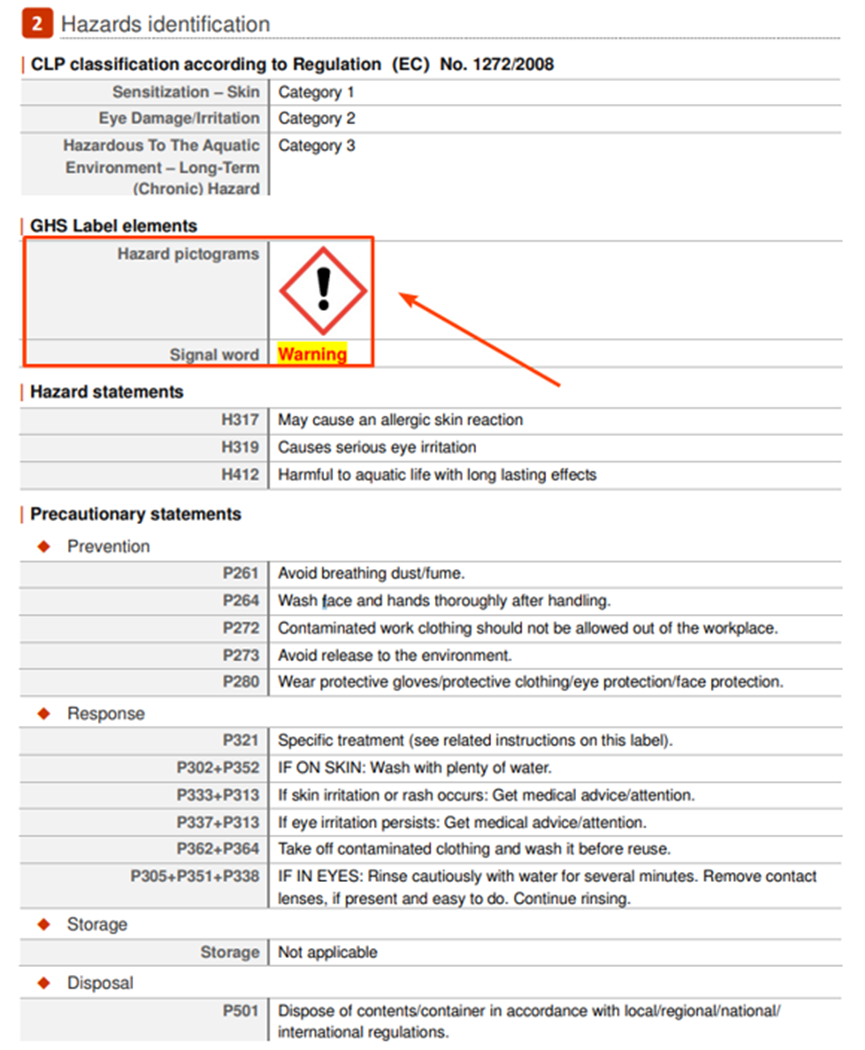
 EN
EN  ZH_TW
ZH_TW  ZH
ZH