
introductory
According toU.S. Food and Drug Administration (FDA) StatisticsIn recent years, more than 35% of imported food products have been detained due to compliance issues, with Asian exporters facing a particularly tough challenge. When your carefully prepared product arrives at a US port, only to receive a Customs Notice of Detention - not only does this mean a huge financial loss, but it can also affect your brand's reputation and long term relationship. In this article, we'll take a closer look atFood Exports to the U.S. Detained FDA RegistrationThe core issue of the problem is to revealReasons for FDA's Food WithholdingThe key details ofGreen CircleHow can customs management tools such as the Customs Management System (CMS) help companies to improve compliance efficiency.
Summary of Core Points
- Incomplete FDA registrationIt is one of the most common causes of tariff deductions encountered by food exporters in Taiwan, Hong Kong and Macau.
- Refusal Orders and Import AlertsThere is a fundamental difference: the former focuses on a single shipment, while the latter affects the long-term reputation of the enterprise.
- Food Additives and Labeling ComplianceDirectly determines whether the product can be cleared through customs
- Green Circle Customs Management SystemHelps track shipment status and prevent compliance risks
- Early self-examination and rectificationIt is the only effective way to remove the import alert list.
Food Exports to the U.S. Detained FDA RegistrationThe Three Core Issues
I. Mandatory Requirements for FDA Registrations
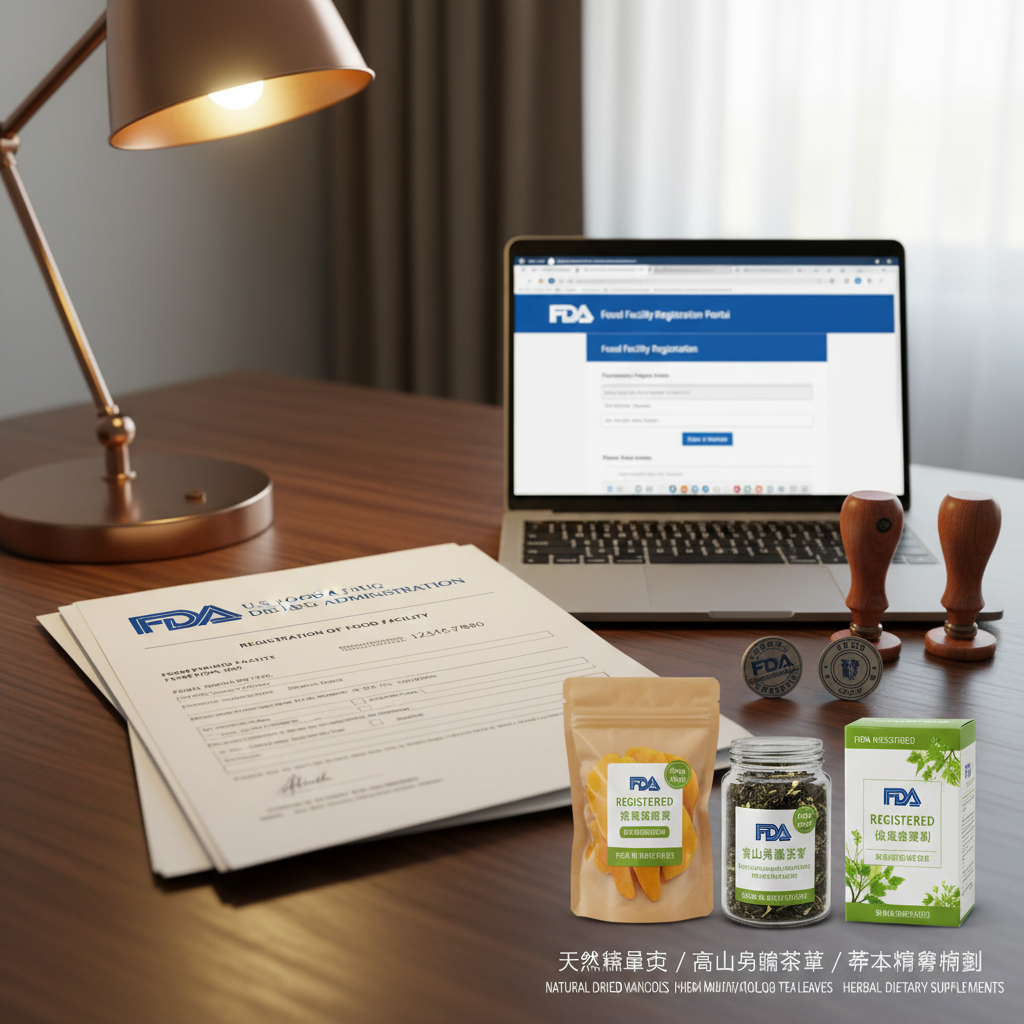
According toThe U.S. Bioterrorism Act providesAll food production, processing, packaging or storage facilities involved in the U.S. market must complete theFDA Food Facility RegistrationMany enterprises in Taiwan, Hong Kong and Macao mistakenly believe that they can export as long as their products meet the standards. Many enterprises in Taiwan, Hong Kong and Macao mistakenly believe that as long as their products comply with the standards, they can export them, but they have overlooked this fundamental legal requirement.
Commonly seen omissions from the register include:
| Question Type | concrete expression | consequences |
|---|---|---|
| Incomplete registration of facilities | The factory is not registered in the FDA system | The goods were directly detained |
| Proxy Information Error | U.S. Agent Contact Failure | Unable to receive FDA notifications |
| Renewal cycle overdue | Failure to reconfirm registration every two years | Lapse of registration |
| Inadequate labeling of product categories | Product Code Error | triggering additional checks |
Expert Tips::FDA RegistrationIt is not a one-time process. Businesses are required to update their registration information every two years and report any changes in facility address, ownership or product type in a timely manner.
Two,Reasons for FDA's Food Withholding: The Four Most Frequently Violated Items
According toFDA Import Alert Public InformationThe analysis shows that exporters from Taiwan, Hong Kong and Macao are most commonly exposed to the violations:
1. Prohibited additives and ingredient violations
The U.S. has adopted a "positive list" system for food additives, whereby only food additives that are listed on the "positive list" can be used.FDA License ListCertain colors, preservatives or sweeteners commonly used in Taiwan may be prohibited in the United States. Certain colors, preservatives or sweeteners commonly used in Taiwan may be prohibited in the United States.
High-risk items:
- Chinese pickled food (often containing excessive nitrite)
- Bakery products (some emulsifiers not approved)
- Beverages (restricted types of artificial sweeteners)
2. Misleading Labeling and Inaccurate Nutrition Facts
**The FDA Nutrition Labeling and Education Act** requires that all packaged foods provide a detailed list of nutrients. Common deficiencies include:
- Unlabeled allergen information (especially nuts, seafood, gluten)
- Incorrect calculation of nutrient content (e.g., calorie, sodium content deviation more than 20%)
- Non-compliant health claims (e.g. descriptions such as "organic" and "sugar-free" need to be certified)
3. Process Hygiene Safety Concerns
FDA Food Safety Modernization Act (FSMA)Upon implementation, preventive control measures will become mandatory.Food Exports to the U.S.The manufacturer must be established:
- Hazard Analysis and Critical Control Point (HACCP) System
- Supply Chain Validation Program
- Environmental Monitoring Records
4. No Prior Notice
All imported foods must submit an electronic notification through FDA's **Prior Notice System** prior to arrival at a U.S. port. Incomplete information or late submission may result in a hold.
Do-not-call vs. Import Alert: Different Strategies
Detention Without Physical Examination (DWPE)
AgainstSingle shipment of unauthorized goodsThis is a "point-to-point" control measure.
Special Characteristics:
- Must be returned or destroyed within 90 days.
- No administrative review may be filed
- Does not affect subsequent shipments of other batches (provided the problem is corrected)
Steps to take:
- Contact U.S. importers and customs brokers immediately.
- Evaluate the cost and feasibility of rectification
- If you can't improve the situation, return the product as soon as possible to minimize the loss.
Import Alert
AgainstCompany or Product CategoryThe long-term control of the Government has far-reaching implications.
The green circle manages the system classification:
| List Type | Regulatory Strength | Removal Difficulty |
|---|---|---|
| Red List | Detention Without Physical Examination (DPTE) | extremely high |
| Yellow List | Enhanced Inspection | moderate |
| Green List | Normal customs clearance (Green Circle) | lower (one's head) |
Key RemindersOnce in the red list, all products of the enterprise will beAuto TriggerIn order to be removed, complete documentation of compliance is required. This process usually takes 6-18 months and involves high testing and certification fees.
Green Circle: Intelligent Compliance Management Solutions
With the rapid growth of cross-border e-commerce and food trade, traditional manual tracking methods can no longer meet the immediate needs.Green CircleThe professional customs management platform was created to provide the following core functions:
Features
- Real-time alarm monitoringAutomatic tracking of FDA import alert updates, first notification to companies
- Compliance Document Library: Consolidation of sample certificates and regulatory guides for various products
- Supply Chain Visualization: Tracking shipments from warehouse to customs clearance
- Risk Assessment Tools: Analyze the probability of product seizure based on historical data.
Suggestions for Use
Pre-export self-check list:
- Confirmation of FDA facility registration expiration date
- Verify that product ingredients comply with U.S. regulations
- View Package Labeling Integrity
- Preparation of HACCP or FSMA compliance documents
- Advance notification 48 hours in advance
Getting Off the Alarm List: A Practical Guide to Self-Help
According toFDA Compliance Policy Guide (CPG)The following steps are available for companies to apply for the removal of import alerts:
Phase I: Evidence Collection (1-3 months)
Essential Materials:
- Third Party Inspection ReportISO 17025 accredited laboratories are required.
- Process Improvement Certificate: Includes HACCP program, hygiene management program
- Staff Training Records: Demonstrate Food Safety Awareness Enhancement
Stage 2: Formal application (3-6 months)
Submit to the **FDA Division of Import Operations and Policy**:
- Request for Removal Letter
- Corrective Action Report
- Five consecutive batches of qualified test certificates
Phase III: FDA Review (6-12 months)
FDA may proceed:
- Written Review
- video audit
- On-site inspections (for high-risk cases)
Success StoriesA Taiwanese tea exporter was placed on the red list due to pesticide residue problems. Through systematic improvement of the production process and submission of 12 consecutive months of test data, the alert was eventually removed after 14 months.
Prevention is Better than Cure: Establishing a Long-Term Compliance Mechanism
Strategy 1: Automate Regulatory Tracking
SubscribeFDA Food Safety News (FDA Food Safety News), regularly reviewed:
- **Federal Register**'s latest proposed statute
- Import Alarm SystemIndustry News
- Compliance Guideupdated version
Strategy 2: Supply Management Enhancement
Ask the ingredient supplier to provide it:
- Certificate of Origin
- No Addition Statement (無添加聲明)
- Test Reports
Strategy 3: Regular internal audits
Quarterly is recommended:
- Labeling Compliance Check
- Process Hygiene Assessment
- Staff Training Test
Conclusion
Foodstuffs exported to the U.S. detainedThe problems may seem complicated, but they are essentially rooted in the need for a better understanding ofFDA RegistrationInadequate understanding of compliance requirements. Through systematic mastery ofReasons for FDA's Food Withholdingand make the best use of itGreen CircleWith the establishment of a preventive mechanism through digital tools, enterprises in Taiwan, Hong Kong and Macao will be able to minimize their risks. Remember:Compliance is not a cost, it is a competitivenessThe company's management system has been well established in advance and is now firmly established in the US market. While the industry is still worried about the problem of customs clearance, enterprises that have established a sound management system in advance have already gained a firm foothold in the U.S. market.
Recommendations for immediate action:
- View current FDA registration status (facility registration and agent information)
- Download the self-checklist provided in this article for product compliance assessment.
- Considering the introduction of a professional customs clearance management system to enhance efficiency
- Establishment of long-term cooperative relationships with customs brokers and testing organizations
To learn moreFood Exports to the U.S.What are your practical tips? Subscribe to our e-newsletter to receive the latest regulatory developments and case studies exclusively!
Frequently Asked Questions
Q1:FDA RegistrationHow long does it take to complete? How much does it cost?
A1: The online registration process takes about 30 minutes and a registration number is issued immediately; FDA does not charge a registration fee, but if a consultant is engaged, the service fee ranges from US$$500-$2,000. It is important to note that registration needs to be revalidated every two years, otherwise the status will be invalidated.
Q2: If the product has been listedImport Alert Red ListIs there any chance of export?
A2: Technically feasible, but extremely difficult. Companies will need to provide complete proof of compliance for each shipment, including third-party test reports, manufacturing process documentation, and so on, and customs clearance will take significantly longer. A more practical approach would be to focus on removing alerts rather than pushing through customs. According to statistics, the success rate of self-application is less than 15%, and it is recommended to seek the assistance of a professional regulatory consultant.
Q3:Green CircleIs TDECS suitable for small exporters?
A3: It's a perfect fit. In fact, small businesses with limited resources need to improve efficiency through systemized tools. Many platforms offer tiered pricing plans starting at $$99 per month, covering basic alarm tracking and document management functions. For companies with annual exports of more than US$$500,000, the ROI for investing in such tools is typically in excess of US$300%.
Q4:FDA holds on food productsWill the insurance company pay the claim?
A4: Depends on the terms of the policy. General "Cargo Insurance" does not cover loss due to non-compliance with customs regulations. It is recommended to take out a trade credit insurance policy or a product liability insurance policy, some of which will cover the risk of regulatory breaches. However, it is important to read the exclusion clauses and inform the insurer of the product features before taking out the policy.
Q5:Can the Prior Notice be reissued later?
A5: No. According to FDA regulations, advance notification must be completed within a specified time frame before the shipment arrives in the U.S. (4 hours for air shipments and 8 hours for ocean shipments). Failure to do so, or incorrect information, will result in automatic detention of the shipment, which cannot be remedied. It is recommended that this be integrated into the standard shipment process and verified by a dedicated person.
Links to reference resources:
- U.S. Food and Drug Administration (FDA) Official Website
- FDA Food Facility Registration System
- Import Alarm Database
- FDA Food Safety Modernization Act (FSMA) Guidance
- U.S. Federal Regulations E-Query System
Popular Articles: (2026 Latest)
FDA Food Registration Guide|Taiwan Food Exports to U.S.A. Must Read (2026 Update)
FDA Food Registration Risk Analysis|Detention, Inspection and Common Errors (2026 Update)
 EN
EN  ZH_TW
ZH_TW  ZH
ZH