
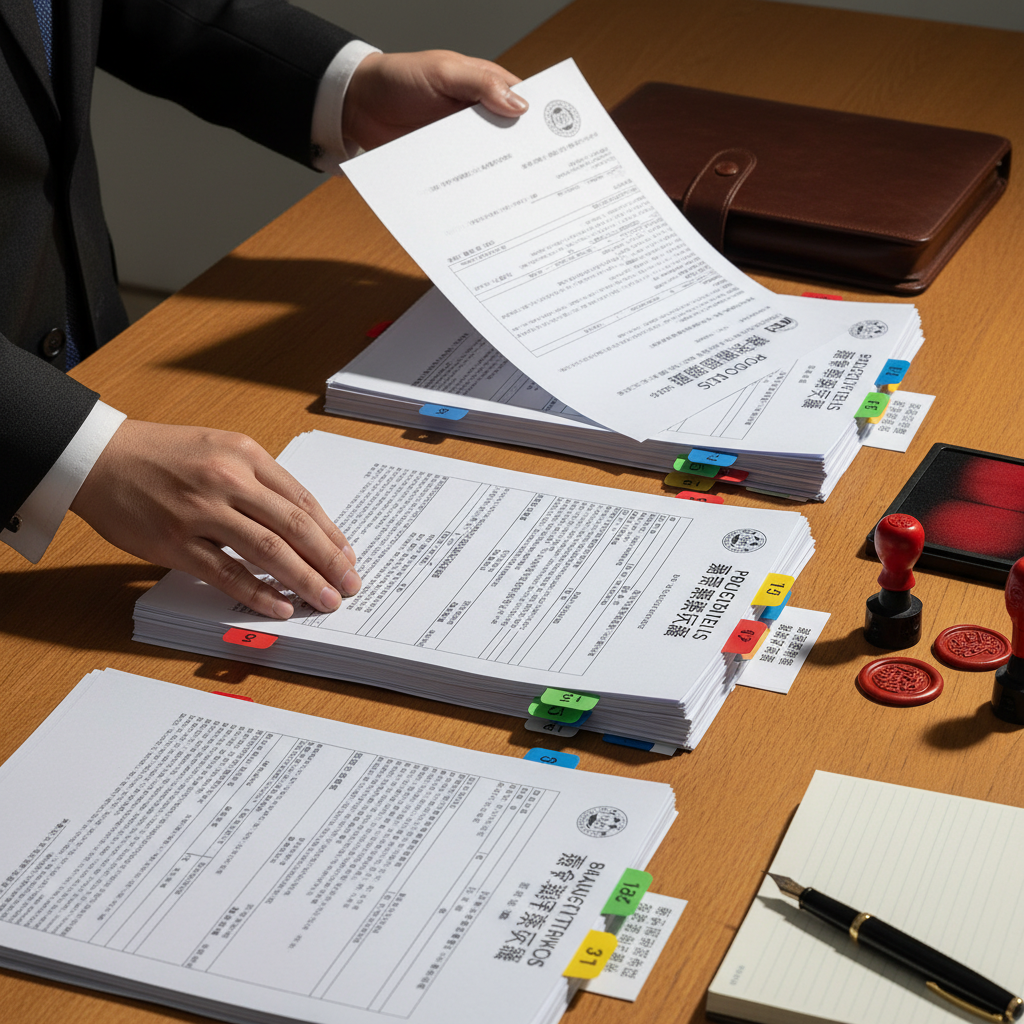
introductory
According to the U.S.FDA Statisticsshows that more than 70% of food facility registration applications were delayed due to incomplete documentation or process errors. For Taiwanese food manufacturers planning to sell their products to the U.S. market, it is important to knowWhat documents are required for FDA food registration TaiwanA complete list of documents that must be prepared by the industry is the first step to ensure smooth customs clearance, avoiding the requirement of Amazon's remedial documents, and preventing customs delays. In this article, we will analyze in detail the types of documents required for FDA food facility registration, preparation points, common mistakes, and professional advice for Taiwan sellers to help them establish a complete compliance system.
Summary of core focus
- Basic Registration DocumentsIncludes corporate identity documents such as company registration certificate, business license, factory registration certificate, and technical information such as product ingredient lists and process descriptions.
- Product Labeling Documentation: FDA-compliant English nutrition labeling, ingredient labeling, warning labels, and other complete package labeling documents.
- Inspection Report Documentation: Third-party laboratory test reports, microbiological tests, heavy metal analysis, and other safety documents.
- Process control documents: HACCP plan, GMP documents, production flow charts and other quality management system documents.
- Proxy documents: US Agent authorization and related contact information documents.

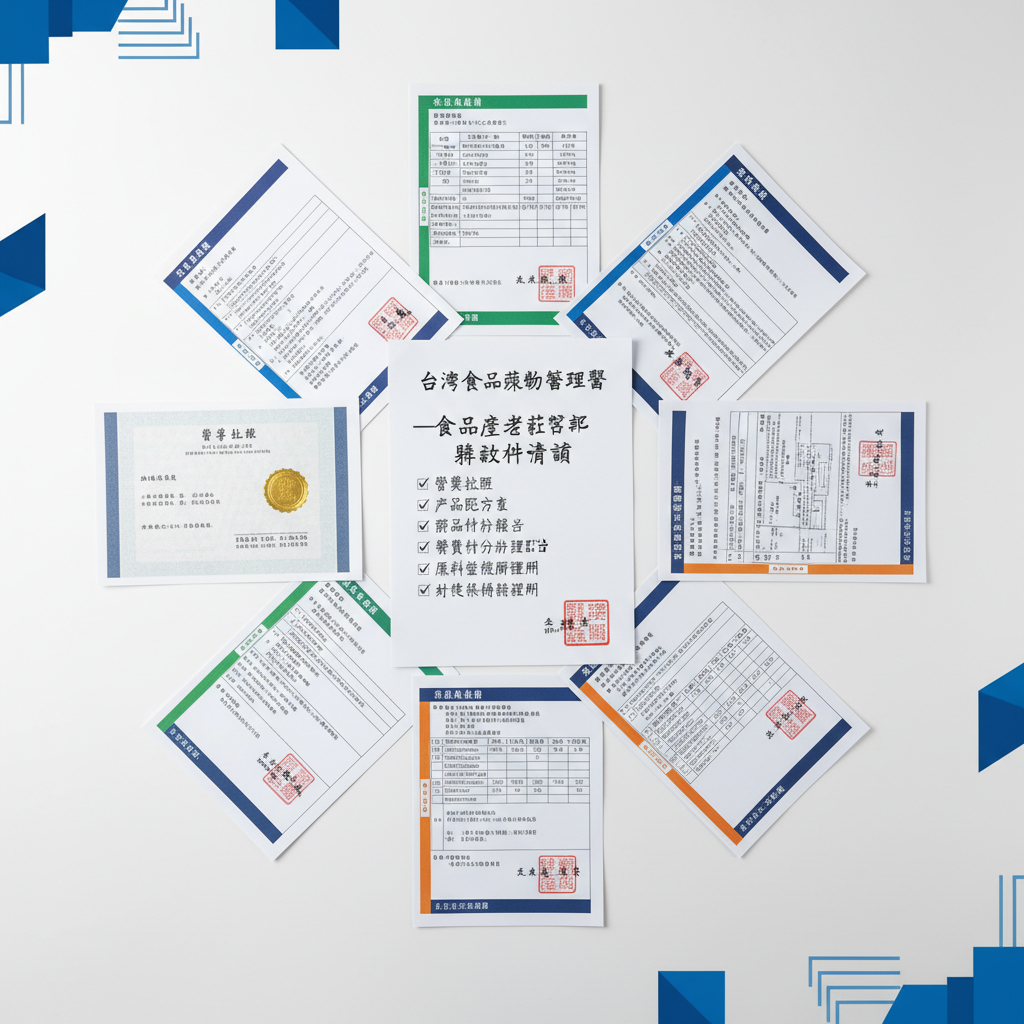
What documents are required for FDA food registration TaiwanComplete List of Owners
I. Proof of identity of the underlying enterprise
Taiwan Food Industry ApplicationWhat documents are required for FDA food registration TaiwanThe first thing to do is to prepareComplete corporate identity documentsThese documents are used to prove the applicant's legal qualifications and the existence of the business entity. These documents are used to prove that the applicant is legally qualified to operate and that the business entity exists.
A list of required corporate documents:
| Document Type | Specific content | Get ready. |
|---|---|---|
| Certificate of Company Registration | Certificate of Company Registration issued by the Department of Commerce, Ministry of Economic Affairs | English translation and notarization are required |
| Business License | Certificate of Food Trader Registration Number | Ensure that the registration category contains export items |
| Factory Registration Certificate | Factory Registration Certificate or Food Factory Registration Certificate | Manufacturing address must be the same as the FDA registered address. |
| Proof of tax registration | Certificate of tax status issued by the IRS | Prove that the enterprise is a legal taxpayer |
| Food Business Registration | Certificate of Registration of Food Business by Food and Drug Administration, Ministry of Health and Welfare. | Export business registration must be included |
Professional Reminder: All documents in Chinese must be providedCertified English TranslationRecommended UseTaiwan Association of Notaries PublicCertified translation services to ensure that documents are legally valid in the United States.
Common errors and solutions:
- Address inconsistencies: The company's registered address, factory address, and FDA registered address must be identical, including the English address format.
- Incompatibility of registration categories: Food business registration codes must include the category of "manufacture" or "export".
- Expired license: All licenses must be valid, and it is recommended that they be renewed 3 months in advance.
Product Technical Information
Product Technical InformationIt is the core document used by the FDA to evaluate the safety of food products, and Taiwanese manufacturers must prepare complete product descriptions that comply with U.S. standards.
Product technical documentation details:
- Complete Ingredient List (Ingredient List)
- Chinese/English comparison table of all ingredients
- Percentage or amount of each ingredient used
- Allergen labeling (according to FDA's eight major allergens)
- Food additives must be marked with FDA license number.
- Product Formula
- Detailed formula ratios
- Process parameters (temperature, time, pH, etc.)
- Storage conditions and retention period setting basis
- Packaging materials and specifications
- Process Flow Chart
- Complete process from receiving raw materials to packaging of finished products
- Critical Control Point (CCP) Labeling
- Temperature and time parameters for each stage
- Quality Inspection Point Labeling
According toU.S. Food Safety Modernization Act (FSMA)requirements, food manufacturers must establishPreventive ControlsThe process documentation must therefore detail how food safety risks will be controlled.
Product labeling and packaging documents
FDA-compliant product labelingbeWhat documents are required for FDA food registration TaiwanThe most error-prone part of the industry. According to statistics, more than 60% of requests for replacement parts are related to mislabeling.
Labeled document inspection checklist:
- Nutrition Facts Label
- Use the standardized format prescribed by the FDA
- Nutritional values are subject to laboratory testing.
- Daily Nutrient Reference Values (%DV) are correctly calculated.
- Font Size and Formatting in accordance with 21 CFR 101
- Ingredients Statement
- Listed in descending order of content
- The composite component shall be marked as such.
- Allergens are marked in bold or in a special way.
- Color additives shall be labeled with FDA approval number.
- Warnings & Claims
- Health claims must be pre-approved by the FDA
- Nutrient content claims to meet defined criteria
- Allergen warnings (e.g., Contains milk, soy)
- Special handling warnings (e.g. Keep refrigerated)
- Manufacturer Information
- Company name and full address
- U.S. Agent Contact Information
- Country of Origin (Made in Taiwan)
- Customer Service Contact Number or Website Address
important reminder: The labeling must match the product information provided in the FDA registration.identicalAny discrepancy may cause delay in clearance. Suggested UseFDA Markup Review ToolConduct a self-check.
Safety Inspection Report
Third Party Laboratory ReportIt is a key document to prove that the product complies with the U.S. food safety standards, and is also an important basis for customs sampling.
Required Inspection Report Type:
| Inspection Items | Testing Standards | Report validity period |
|---|---|---|
| Nutritional Composition Analysis | AOAC official methodology | Effective while the formula remains unchanged |
| Microbiology | FDA BAM methodology | Recommended to be updated per batch or annually |
| Heavy Metal Testing | ICP-MS method | Annual renewal or formula change |
| Pesticide residues | EPA Standard Methods | Updated per batch or quarter |
| Allergen Testing | ELISA method | When there is a change in formula or process |
| Preservatives and Additives | HPLC/GC method | Valid while the formula remains unchanged |
Laboratory Selection Recommendations:
- PreferencesISO/IEC 17025 certificationThe laboratory of the
- It is recommended to use FDA-accredited U.S. laboratories or well-known organizations such as Taiwan SGS and National Notary Public.
- The test report must be in English and include the laboratory accreditation number.
- The report should clearly indicate the test method, detection limit and result judgment.
V. Quality Management System Documentation
FDA requires food manufacturers to establishComplete Food Safety Management SystemThe documentation is an important basis for proving that the company has quality control capabilities.
Core Quality Documentation:
- HACCP program (Hazard Analysis and Critical Control Points)
- Hazard Analysis Worksheet
- Critical Control Point Confirmation Form
- Basis for Setting Control Limits
- Monitoring Procedures and Record Forms
- Procedures for corrective measures
- Verification and validation procedures
- GMP Documentation (Good Manufacturing Practice)
- Plant Facilities Plan
- Personnel Hygiene Management Program
- Equipment Cleaning and Disinfection Procedures
- Warehouse and Transportation Management Program
- Pest Control Program
- Traceability System document (Traceability System)
- Raw material supplier list and qualification
- Batch Number Management System Description
- Product Recall Procedures
- Customer Complaint Handling Process
According toU.S. Department of Agriculture (USDA)Joint requirements with the FDA require that food traceability systems must be able toWithin 24 hoursTrace back to the source of the raw material and complete the product recall simulation.
Expert Advice: Recommended for Taiwan operatorsInstitute of Food Industry DevelopmentHACCP and GMP counseling resources are provided to establish a quality management system that meets international standards.
U.S. Agent Documents
**US Agent** is a necessary role required by FDA regulations to receive FDA notifications and assist in communications.
U.S. Agent Documentation Requirements:
- US Agent Authorization
- The scope and duration of the agency shall be included in the formal power of attorney.
- Agent's name, address, phone number and email address
- Formal contract signed by both parties
- Proof of agent's qualifications
- Contact Information Form
- 24-hour emergency contact number
- Proof of English communication skills
- Physical address within the U.S. (no P.O. Boxes)
- Agency Service Agreement
- Scope of Services and Definition of Responsibilities
- Fees and Payment Terms
- Termination of Contract
Notes on choosing a U.S. agent:
- Confirmation that the agent hasPhysical Business AddressInstead of a virtual office
- Certified Agents' Past Service Experience and Client Testimonials
- Ensure agents understand the characteristics of Taiwan's food industry
- Establishment of a clear communication mechanism and response timeframe
VII. Other supplementary documents
Depending on the type and characteristics of the productWhat documents are required for FDA food registration TaiwanAdditional documents that owners may need to prepare:
Additional documentation for special products:
- Acidified Foods
- Thermal Penetration Research Report
- pH Control Program
- FCE/SID Registration Number
- Process Flow Checklist
- Low-Acid Canned Foods (LACF)
- Commercial Sterilization Verification Report
- Process Audit Information
- Operator Training Certificate
- Better Process Control School Certificate of Completion
- Dietary Supplements
- New Dietary Ingredient Notification (NDI Notification)
- Health Statement Supporting Documents
- Certificate of Good Manufacturing Practice Compliance
- Infant Formula
- Proof of Nutritional Adequacy of Formulation
- Quality Factor Test Report
- Bioavailability studies
- Clinical Trial Data
According toU.S. Centers for Disease Control and Prevention (CDC)Food-related illnesses statistically affect millions of Americans each year, so the FDA's review of documentation for high-risk products is particularly rigorous.
Common Document Preparation Errors and Solutions
Error 1: Document language does not match the formatting
Description of the problem: Provision of Chinese documents or incorrect translation format
Solutions::
- All documents must be providedOfficial English version
- Use of professional translation and notarization
- Technical terminology utilizes official FDA terminology
- Maintaining file format consistency
Mistake 2: Inconsistent information
Description of the problem: Inconsistent product information, addresses, and contact information in different documents
Solutions::
- build upDocument management checklist
- Use of standardized company information templates
- Product information is based on the latest version
- Regular cross-referencing
Mistake 3: Expired or incomplete inspection report
Description of the problem: The inspection report provided lacks the required items or has exceeded the expiration date.
Solutions::
- Create an inspection reportUpdate Timetable
- Plan your test schedule 6 months in advance
- Confirmation that the report contains all FDA-required items
- Keep the original laboratory data for reference
Mistake 4: Lack of proof of actual implementation of quality documents
Description of the problem: only the program book but not the actual execution record
Solutions::
- PreparationAt least 3 monthsThe execution record of the
- Includes monitoring data, deviation handling, and corrective measures.
- Conduct regular internal audits and maintain reports
- Establishment of a comprehensive document control system
Document Preparation Timeline Planning Recommendations
To ensure the smooth completion of theWhat documents are required for FDA food registration TaiwanThe following timeline is recommended for the preparation of documents by the industry:
Standard preparation schedule (recommended to start 6 months in advance):
- 1st - 2nd month: Corporate Identity Document Preparation and Translation Authentication
- 2nd-3rd month: Product Formulation Confirmation and Labeling Design
- 3rd-4th month: Sending and Obtaining Inspection Reports
- 4th-5th monthQuality system documentation and implementation
- 5th-6th month: U.S. Agent Selection and Document Compilation
- 6th month: Final Review and FDA Registration Application
Time Management Recommendations: According toMcKinsey ResearchA well-established preparation phase can reduce the time for 70%'s subsequent patches, and it is recommended that Taiwanese operators fully utilize the preparation period to establish a long-term usable documentation system.
Professional Services Resources and Assistance
For first-time applicants or those with limited resources in Taiwan, they may consider seeking professional assistance:
Available Resources Pipeline:
- Government Counseling Resources
- Export Counseling, Department of International Trade, Ministry of Economic Affairs
- Food Industry Development Institute Technical Consultation
- Local Government Outbound Sales Counseling Program
- Professional Consultancy Services
- FDA Registration Service
- Labeling Review and Design Services
- Quality system construction counseling
- Inspection and Delivery Planning
- Industry Association Support
- Taiwan Food Industry Association
- Foodstuffs Merchants Association of All Counties and Cities
- The Exporters' Association
According toDeloitte Industry SurveyThe success rate of first-time applications for companies using professional services is 45% higher than that of self-processing, and the average time saved is 2-3 months.
Conclusion
What documents are required for FDA food registration TaiwanThe industry's complete preparation checklist includes six categories of core documents, including corporate identification, product technical data, labeling documents, inspection reports, quality management documents, and U.S. agent documents.Well-prepared documentation is a critical foundation for successful FDA registration.This not only ensures smooth customs clearance, but also establishes a compliance system that is usable in the long term and reduces future operational risks.
Taiwan's food industry shouldAt least 6 months in advanceBegin planning document preparation to ensure all documents meet the latest FDA regulatory requirements. It is recommended to createSystematized document management mechanismWe regularly update inspection reports and quality records, and have established long-term relationships with reliable U.S. agents.
Recommendations for Immediate ActionReview your current document preparation status, use the checklist provided here to confirm each item, and seek professional assistance if necessary. Investing in complete document preparation will provide a solid foundation for your U.S. expansion and avoid delays and additional costs associated with documentation issues.
Frequently Asked Questions (FAQ)
Q1:What documents are required for FDA food registration TaiwanHow long does it take to get ready?
completeWhat documents are required for FDA food registration TaiwanPreparation RecommendationsAt least 4-6 monthsThis includes corporate license translation certification (1 month), product inspection report acquisition (2-3 months), quality system documentation creation (1-2 months), and US agent selection (1 month). This includes corporate license translation and certification (1 month), product inspection report acquisition (2-3 months), quality system documentation (1-2 months), and U.S. Agent selection (1 month). For first-time applicants with limited in-house resources, it is recommended to start preparation 6 months in advance and allow a 1-2 month buffer time to handle possible supplemental requests. Experienced practitioners can shorten the period to 2-3 months if they have an established filing system.
Q2: Do all Chinese documents have to be notarized and translated?
Yes, certified English translations of all official documents are requiredThe notarization of legal documents Legal documents, including company registration certificates, factory registration certificates, business licenses, etc., must be translated by qualified translators and notarized and stamped with a certified seal. Product technical documents such as recipe lists, process instructions, etc. do not necessarily need to be notarized, but must be provided in a professional and accurate English version. It is recommended to use a translator who is familiar with the terminology of food products to ensure the accuracy of the technical content and to avoid any misunderstanding caused by translation errors.
Q3:Does the test report have to be done in a U.S. laboratory?
Not necessarily, but it must be an internationally accredited laboratory.The FDA accepts the compliance with theISO/IEC 17025 International StandardAccredited laboratory reports, well-known laboratories in Taiwan such as SGS, National Notary Public, and Taiwan American Inspection have this qualification. It is important that the test method must comply with FDA-approved standard methods (e.g., AOAC, FDA BAM, etc.), and the report must be in English and clearly labeled with the laboratory's accreditation information. For some specific items, such as nutritional analysis, it is sufficient to use a Taiwan laboratory; however, in the event of a customs sampling or dispute case, a report from a U.S. laboratory may have more credibility.
Q4:What documents need to be updated if the product formula is adjusted?
Changes in product formulations will affect a number of documentsThe necessary updates include: (1)Full ingredient list and recipe documentation(2)Product Labeling(Nutrition labeling values, ingredient ordering may change); (3)Nutritional Composition Analysis Report(must be resubmitted for examination); (4)Allergen Statement(if an allergen component is added or removed); (5)HACCP Program(if it affects Hazard Analysis or Critical Control Points). It is recommended that the impact on FDA registration be evaluated prior to formulation adjustment and that all documentation be updated prior to notification of change in FDA information. Minor adjustments to formulations that do not affect key ingredient and nutritional values may result in a full update as appropriate.
Q5:Can a U.S. agent be a friend or relative?
Theoretically possible, but strongly discouraged.The FDA requires that the U.S. agent must have (1)Physical address within the United States(no access to postal mailboxes); (2)24 hours contact(3)Ability to process FDA notifications in real time(4)English communication skills. Ordinary friends and relatives may not be able to meet the professionalism and immediacy requirements, especially when the FDA issues emergency notices or when professional judgment is required. A professional U.S. agent's services usually include FDA regulatory consultation, document processing, emergency coordination, etc. The annual fee of approximately $$300-$1,000 is a worthwhile investment relative to the potential risks. Choosing a professional agent ensures compliance and reduces the risk of communication errors.
 EN
EN  ZH_TW
ZH_TW  ZH
ZH