

introductory
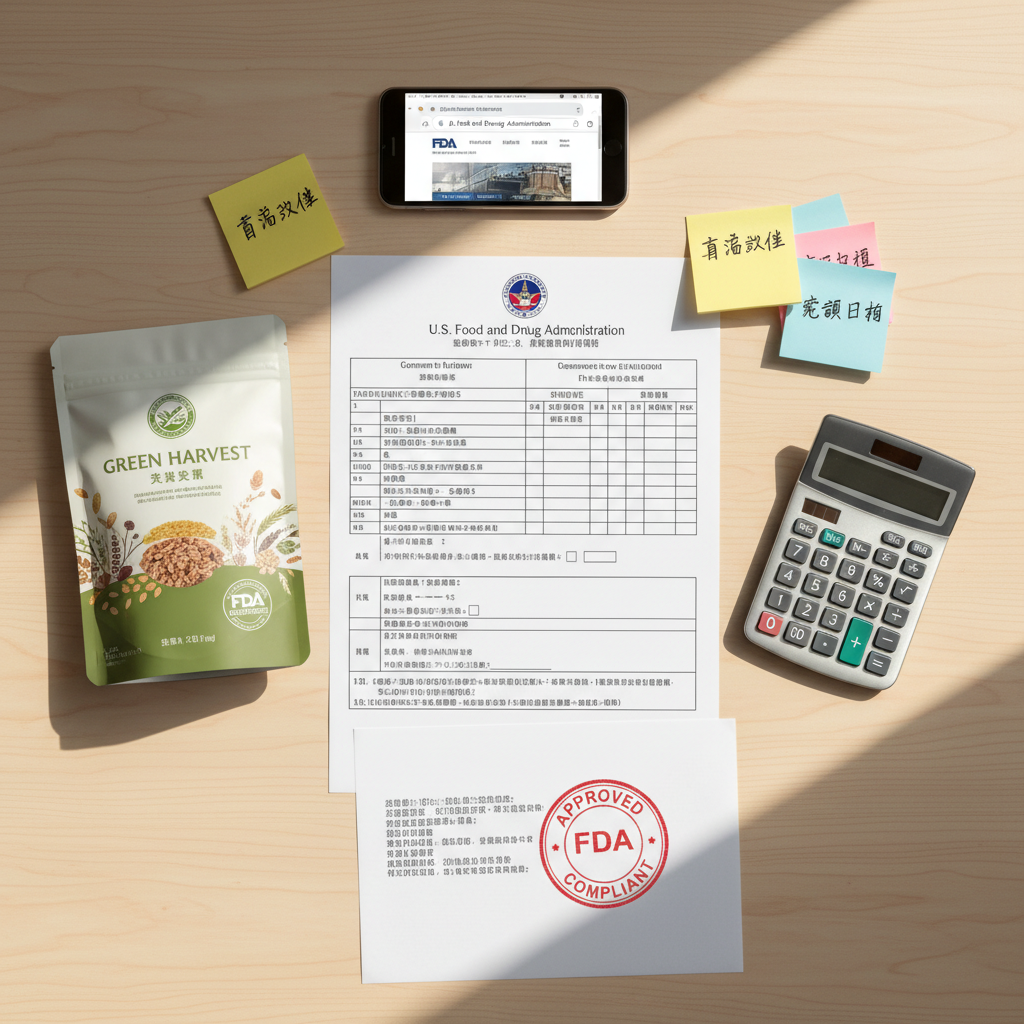
Research has shown that 93% people suffer from the 'illusion of knowledge' - you think you understand, but you don't. This is particularly evident in the food industry. This is especially true in the food industry. Many brands mistakenly think they are choosing products that are already FDA Registration(used form a nominal expression)OEMAfter that, they can enter the US market directly without any worries. However, this is not the case. According toU.S. FDA official regulationseven ifOEM factory has FDA registration. Do you need it for the brand?? The answer is:Absolutely.In this article, we'll give you an in-depth look at why. In this article, we'll give you an in-depth look at whyBrand Name FDA Food RegistrationIndispensable, and how to understand it correctlygreen circleThe certification system allows your products to enter the U.S. market legally and smoothly.
Summary of Core Points
- Brands need to independently complete their own FDA food facility registrations even if the OEM is FDA registered.
- The FDA numbers of the brand and the OEM are different and cannot be replaced or shared.
- Failure to complete brand registration may result in products not being cleared through customs, being seized or even destroyed.
- A proper understanding of the "green circle" labeling system helps to establish a complete compliance framework
- The D&B Global Number (D-U-N-S Number) is a prerequisite for FDA registration.

The Double Duty of FDA Registration: Why Foundry Registration is Inadequate
Differences in legal roles between OEMs and brands
When planning their entry into the U.S. market, many brands often fall into a myth: since the partneringFoundry FDA registeredSo, you don't need to apply for the additional fee, do you? This seems to be a reasonable idea, but it is actually very wrong.
According toU.S. Federal Food, Drug and Cosmetic Act(Federal Food, Drug, and Cosmetic Act).Every business entity that sells food in the United StatesBoth must register independently with the FDA. The key here is the word "business entity" - the OEM is a legal entity, and the brand owner is a completely separate legal entity.
Why do I need dual registration?
| Registration Type | Responsible parties | Registration | Liability |
|---|---|---|---|
| OEM FDA Registration | manufacturer | Production facilities, process management, and hygiene standards. | Product Manufacturing Safety |
| Brand Name FDA Registered | Brand Owner/Importer | Product Formulation, Labeling, Supply Chain Traceability | Market Circulation Responsibility |
| Importer Registration | Distributors in the U.S. | Import declaration and customs clearance documents | Customs and Market Regulation |
According toDun & Bradstreet Official Information(math.) genusBrand Name FDA Food RegistrationIt's a critical part of establishing product traceability. When something goes wrong with a product, the FDA needs to be able to quickly find the responsible brand, not just the manufacturing plant.
Experts' ReminderThe FDA registration system is based on the principle of "whoever is responsible for the product must be registered". OEMs are responsible for production safety, while brands are responsible for product compliance and marketing.
"Relationship of the Green Circle Certification System to FDA Registration
What is the Green Circle Stamp?
In recent years.green circleThis concept is gaining traction in the food industry. Although it is not an official FDA seal of approval, it is used in many third-party compliance platforms and supply chain management systems.green circleIt means that the company has completed basic food safety certification and traceability documentation.
According toFood Safety Modernization Act(FSMA) requires that modern food supply chains have complete traceability.green circleSystems are usually integrated:
- FDA Facility Registration Number
- GMP (Good Manufacturing Practice) Certification
- HACCP (Hazard Analysis Critical Control Point) program
- Third Party Inspection Report
- Supply Chain Traceability Documentation
Why can't we just rely on "green circles"?
despitegreen circleA logo can demonstrate a business's compliance efforts, but itNo substitute for formal FDA registrationIt's like having a driver's license. It's like having your driving skills certified, but still needing a full driver's license to legally be on the road.
Complete process for brand-side FDA registration
Must-have before applying: 6 core information
According toD&B Taiwan Official Guide(math.) genusBrand Name FDA Food RegistrationThe following information is required:
- Business License(English translation notarized)
- D&B Global Code(D-U-N-S Number) - This is the unique identifier used to verify a company's identity in the FDA system.
- Product Formulation and Ingredient List(full disclosure of all ingredients)
- Sample Product Label(Complies with U.S. FDA labeling regulations)
- Supply Chain Information(including the FDA registration number of the foundry)
- U.S. Agent Information(US Agent, must be an entity within the United States)
Important Notes: Even ifOEM factory has FDA registration. Do you need it for the brand?The answer to this question is yes, but brands are still required to provide the registration information of the foundry when applying to form a complete supply chain traceability link.
Five Steps to Registration
Step 1: Obtain a Dunn & Bradstreet Code (D-U-N-S Number)
This is the basis for all processes. According toU.S. Department of Commerce InformationD-U-N-S Number is a globally recognized corporate identification system.
Step 2: Register your account with the FDA system
Visiting FDA Food Facility Registration System(Food Facility Registration) to create a business account.
Step 3: Complete Facility Information
Includes company address, contact information, product categories, manufacturing processes and other details.
Step 4: Appointment of U.S. Agent
This agent must be an individual or business within the U.S. that is responsible for receiving all official notices from the FDA.
Step 5: Obtain a registration number and update it regularly
Successful registration results in a unique FDA Registration Number.This number needs to be updated every two yearsThe
Common Misconceptions and Compliance Risks
Misconception 1: "OEM registration is enough".
This is the most dangerous misunderstanding. According toU.S. Customs and Border Protection(CBP) requires that products imported must be provided withBrand's FDA registration numberThe absence of this number may result in Lack of this number may result:
- Cargo detained at port
- Forced return or destruction
- Brands are blacklisted
- Facing high fines
Misconception 2: "One registration is valid for life".
FDA Registration NumberNot permanent. Businesses must:
- Reconfirmation of registration information every two years
- Update company information as soon as it changes
- Supplementary declaration when the product line is increased
Misconception 3: "All OEMs are registered the same".
Different types of food facilities have different registration requirements. According toFDA Food Categorization Guidance::
- Low Acid Canned FoodAdditional FCE (Food Canning Establishment) and SID (Submission Identifier) are required.
- acidified foodProcess Filing is required.
- Dietary SupplementsThere are special NDI (New Dietary Ingredient) notification requirements.
Case Study: Taiwan Tea Drinking Brand Experience
A well-known Taiwan handcrafted beverage brand plans to export bottled tea to the United States. They chose a company that already had FDA Registration(used form a nominal expression)OEMThe company has been producing the products for the U.S. market and believes that this will meet the requirements of the U.S. market.
However, when the first shipment of products arrived at the port of Los Angeles, the Customs Department asked for theBrand's FDA registration numberThe whole shipment was seized for three months because the brand had not completed the registration. As the brand owner had not completed the registration, the whole batch of goods was detained for as long as three months, which not only caused financial loss, but also missed the peak selling season of summer beverages.
Case Revelation: Even ifFoundry FDA registered(math.) genusBranded side RequiredCompleting your own registration process independently is a compliance step that cannot be skipped.
How to establish a complete compliance system
Integration of Green Circle and FDA Registration
green circleThe system can be used as an internal management tool to assist the organization:
- Centralized management of all certified documents
- Tracking Registration Renewal Timeframe
- Monitor supply chain compliance
- Quick Response FDA Check
Proposed Compliance Checklist
✅ The brand has completed FDA food facility registration.
✅ OEM FDA registration is valid and in effect.
✅ Qualified U.S. Agent Appointed
✅ Product labeling meets FDA requirements
✅ Necessary third party inspection reports have been obtained
✅ Establish complete supply chain traceability documentation
✅ Setting up a registration renewal reminder mechanism
Latest Regulatory Trends 2026
According toCongressional Research ServiceIn a recent report, the FDA is strengthening food traceability requirements. The following changes are expected to affect all food businesses by 2026:
- Mandatory Electronic Tracing System: Paper records will no longer be accepted
- Immediate notification mechanismProduct recalls must be notified within 24 hours.
- Increased transparency in the supply chain: All countries of origin of raw materials must be disclosed.
- Stricter Labeling Scrutiny: More detailed requirements for nutrition labeling and allergen warnings.
These trends mean thatBrand Name FDA Food RegistrationNot only is it a legal requirement, but it is also the key to building a competitive advantage.
Conclusion: Compliance is the cornerstone of long-term brand development.
Many businesses view FDA registration as a burden, but in the long run, it's actuallyAn important component of brand valueTheEven if the OEM has FDA registration, the brand needs toCompleting your own registration is not only a legal requirement, it is also a sign of responsibility to your consumers.
existgreen circleWith the help of a compliance management system, such as the CMS, organizations can more efficiently manage the complexity of the certification process. Remember.Brand Name FDA Food RegistrationNot a one-off procedure, but a compliance commitment that needs to be maintained on an ongoing basis.
Recommendations for Immediate Action::
- See if your brand has completed FDA registration
- Confirmation of the registration status and expiration date of the foundry.
- Establishment of internal compliance tracking mechanism
- Consult with a professional FDA registration consultant
Don't let compliance issues become a stumbling block to entering the U.S. market.Prepare now and get your brand on the international stage!The
Frequently Asked Questions (FAQ)
Q1: If the OEM is already FDA registered, does the brand need to register itself?
Yes.Absolutely.This is one of the most common misconceptions that many businesses have. This is the most common misconception of many businesses.OEM factory has FDA registration. Do you need it for the brand?The answer is registration. The answer is mandatory registration, and the FDA requires separate registration for each legal entity in the supply chain. The registration of an OEM covers its manufacturing facility, while the registration of aBrand Name FDA Food RegistrationIt covers both product ownership and market liability. The two have different functions and are not interchangeable.
Q2: Can Green Circle certification replace FDA registration?
No can do.green circleIt is a third-party compliance management system or seal, and while it helps to consolidate various certification information, itNot an officially recognized FDA registration process.The FDA is the only organization that can legally sell food in the U.S. Companies still need to complete formal registration directly with the FDA in order to legally sell food in the U.S. market. It is possible to transfergreen circleViewed as a complementary tool, not an alternative.
Q3: How long does it take to register with the FDA? How much is the fee?
Registration TimeUsually 2-4 weeks, provided all documents are complete and correct.FeesThe FDA food facility registration itself is free, but you may have to pay for it:
- D&B Code Application Fee (Approx. USD $200-500)
- U.S. Agent Service Fee (Annual fee about USD $300-800)
- Fee for professional consultancy assistance (depending on the scope of services)
Q4:Do I need to re-register if the product formula is changed?
It depends on the extent of the change.Minor adjustments(e.g. fine-tuning of spice ratios) usually only requires an update of the registration information. But if it involves:
- New key ingredients
- Change of product category (e.g. from general food to dietary supplements)
- Increase in allergenic ingredients
Then you need toSubmission of amendment notices(Amendments) and, in some cases, even full resubmissions. It is recommended that you consult with an FDA Compliance Specialist before making any formulation changes.
Q5:Do SMEs have to complete FDA registration? Are there any exemptions?
Under FDA regulations, theAlmost allBusinesses that manufacture, process, package, or hold food for U.S. consumption are required to register.No matter how big or smallThe following are exceptions to this rule. There are only a few exceptions, including:
- Small farms selling directly to consumers (annual sales below a specific threshold)
- Non-profit food organizations
- Fishing vessels engaged in capture fisheries only
Even microbusinesses that sell small quantities of products through e-commerce platforms, as long as the products enter the U.S.Brand Name FDA Food RegistrationStill necessary.
Sources of reference:
- U.S. Food and Drug Administration (FDA) Official Website
- Dun & Bradstreet's Guide to Corporate Certification
- U.S. Customs and Border Protection (CBP) Import Regulations
- Food Safety Modernization Act (FSMA) Complete Provisions
- U.S. Department of Commerce International Trade Administration Resources
The content of this article is for informational purposes only. Please refer to the latest FDA regulations for specific registration requirements. It is recommended that you seek the assistance of a professional regulatory consultant to ensure full compliance.
Popular Articles: (2026 Latest)
FDA Food Registration Guide|Taiwan Food Exports to U.S.A. Must Read (2026 Update)
 EN
EN  ZH_TW
ZH_TW  ZH
ZH