
7 Reasons Why FDA Foods Are Being Withheld, Taiwan Industry Most Often Treads on Them (2026 Update)
introductory
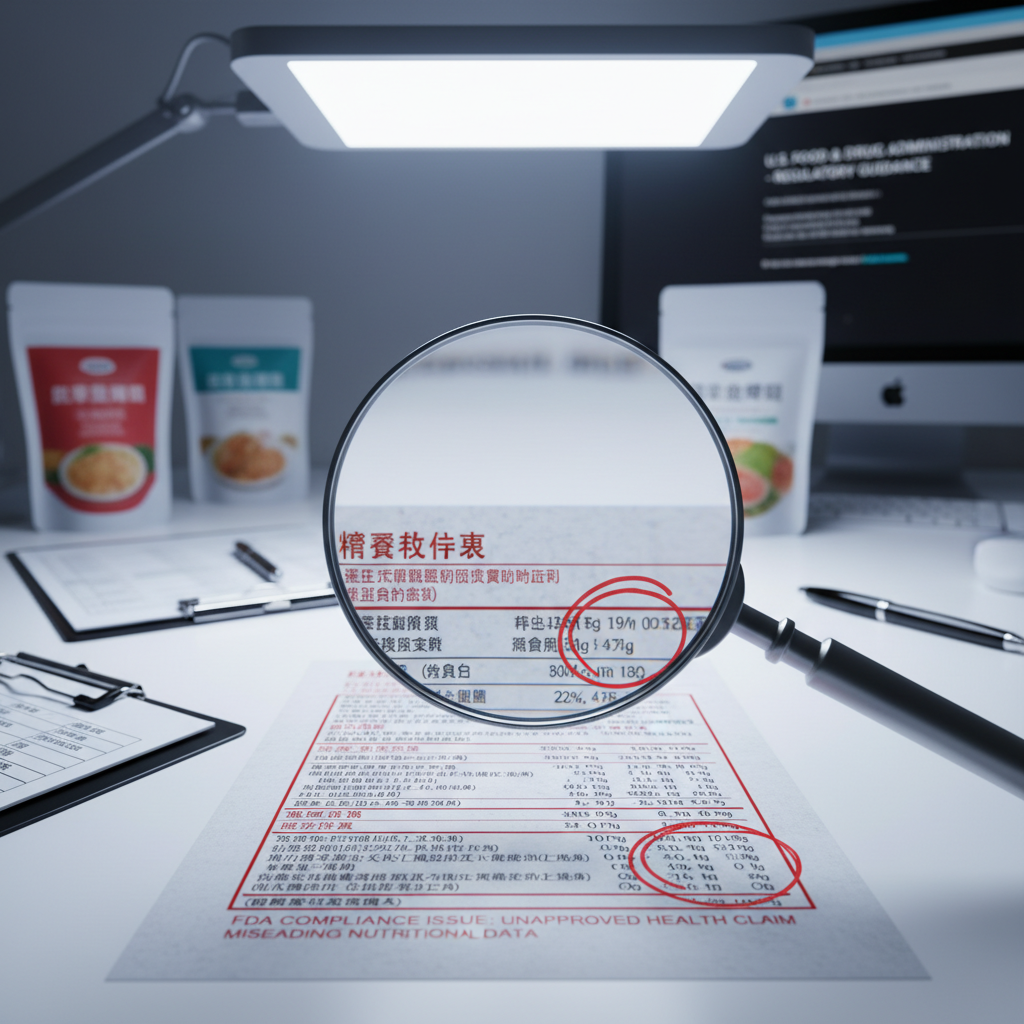
According toU.S. FDA StatisticsAccording to the FDA, more than 15% of imported food products are detained each year due to a variety of compliance issues, and Taiwan's industry accounts for a significant portion of this total. When your carefully prepared food container arrives at a U.S. port and receives a notice of FDA detention, the anxiety and loss is incalculable - not only the financial loss, but also the possibility of missing the market opportunity.FDA Foods Withheld ReasonsComplicated as they are, most of the problems are preventable. In this article, we will analyze the seven most common pitfalls encountered by the Taiwanese industry and provide a list ofGreen CircleProfessional compliance solutions to help you open the door to the U.S. market.
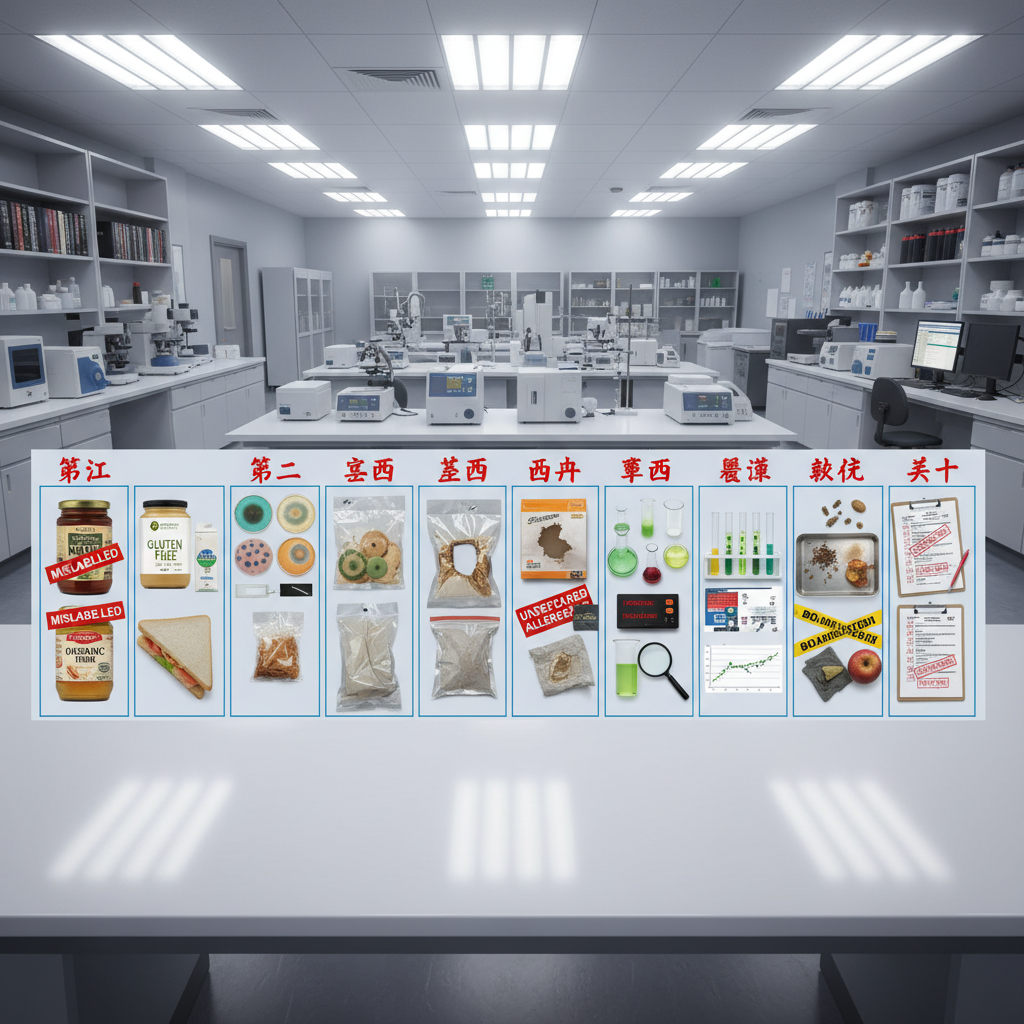
Summary of Core Points
- Additive ProblemsTaiwan legal additives may be prohibited in the U.S., which is the most common cause of detention.
- Non-compliant labelingNutrition labeling, ingredient listings, and allergen labeling must comply with strict FDA regulations.
- Manufacturer not registered: The FDA requires all food facilities to complete registration or they cannot be imported.
- Hygiene and Safety Concerns: Process control, microbial contamination, heavy metal exceedance, etc.
- Incorrectly categorized products: Misrepresenting dietary supplements as general food or vice versa
- Lack of regulatory support documents: Failure to provide the necessary documents such as process validation and safety testing.
- Inadequate preventive controls: No food safety program in place for HACCP or FSMA requirements
I. Prohibited additives: legal is not the same as globally acceptable
The Pitfalls of Differences in Taiwanese and U.S. Laws
Many Taiwanese businesses mistakenly believe that food additives that are legal for use in Taiwan can be used in the U.S. with impunity. HoweverU.S. FDA Regulation of Food AdditivesAdoption of a "positive list" system under which all unauthorized substances are banned.FDA Foods Withheld ReasonsThe question of additives tops the list.
A list of common illegal additives:
| Name of additives | Usage in Taiwan | U.S. Statute of Limitations | alternative |
|---|---|---|---|
| Titanium dioxide | Legal colorants | Partial restriction of use | natural color |
| Certain artificial sweeteners | Widely used | Specific approval required | Stevia, Erythritol |
| Specific preservatives | Common Preservatives | Strict concentration limits | Natural antioxidants |
| Bleach residue | Process Use | zero-tolerance policy | Process Improvement |
Expert AdviceThe following is an example of how a product should be developed: it should be aligned with theFDA's GRAS ChecklistWe are committed to ensuring that all of our ingredients meet U.S. regulatory requirements.Green CircleProvide professional formula review service to avoid additives violation at source.
Second, labeling irregularities: the devil hides in the details
Stringent Requirements for Nutrition Labeling
The FDA's requirements for food labeling are extremely detailed, ranging from font size and information arrangement to the calculation of nutritional content. According toFDA Labeling GuidanceThe non-compliant markings areFDA Foods Withheld ReasonsThe second most important factor in the
Flags common error types:
- Incorrect formatting of the Nutritional Composition Table
- Failure to use the new FDA-required nutrition labeling format
- Added sugars not individually labeled
- Vitamins and minerals are incorrectly labeled.
- Inadequate labeling of allergens
- Eight major allergens not clearly labeled
- Lack of cross-pollution alerts
- The source of the ingredient is not known
- Ingredient List Question
- Not scaled by weight
- The composite component is unexplained.
- Use of unrecognized ingredient names
- Claimed language violations
- Unsubstantiated health claims
- Misleading Nutritional Emphasis
- Violation of Organic Certification Requirements
Green CircleOur labeling review service covers a complete FDA compliance check to ensure that every labeling detail meets the latest regulatory requirements.
Manufacturer registration: the first barrier to entry
The Need for FDA Food Facility Registration
Many Taiwanese manufacturers have overlooked a basic requirement:All manufacturing, processing, packaging or storage facilities that export food to the U.S. must be registered with the FDA.It's a good idea. This isBioterrorism BillOne of the core requirements of the
Often there are omissions in the register:
- ❌ Misconception that only large factories need to be registered
- ❌ Registration information is out of date and not updated
- ❌ Change of manufacturing location without re-registration
- ❌ Registration of foundry not completed
- ❌ Incorrect selection of registration category
important reminder: FDA facility registrations must be renewed every two years (October through December of even-numbered years), and failure to do so will result in the product not being imported.Green CircleProvides one-stop FDA registration service, including registration application, information update and expiration reminder.
The registration process is simplified:
Step 1: Prepare basic company information → Step 2: Confirm product category → Step 3: Submit registration online → Step 4: Receive registration number
Step 3: Submit online registration → Step 4: Obtain a registration number → Step 5: Regularly update and maintain your company.
Step 5: Regular update and maintenance
Health and Safety Concerns: Zero Tolerance Quality Standard
Food Safety Requirements in the FSMA Era
sinceFood Safety Modernization Act (FSMA)Since its implementation, the FDA has tightened health and safety controls on imported foods.FDA Foods Withheld ReasonsHygiene problems are often accompanied by the most serious consequences.
High-risk hygiene issues:
| Question Type | Inspection Highlights | Preventive Measures |
|---|---|---|
| microbial contamination | Salmonella, Listeria, Escherichia coli | GMP certification, periodic testing |
| Heavy metal exceeds the standard | Lead, cadmium, mercury, arsenic | Raw material inspection, process control |
| foreign matter | Metal, glass, plastic fragments | Metal Detectors, Sieving Equipment |
| chemical residue | Pesticides, Veterinary Drugs, Detergents | Vendor Audit, Residual Testing |
| mycotoxin | Aspergillus flavus, Aspergillus ochraceus | Storage condition control, testing program |
Establishment of Preventive Control System
Under FSMA requirements, food business owners must establishPreventive Controls, included:
- Conduct Hazard Analysis
- Establishing a Preventive Control Program
- Implement a vendor verification program
- Recording and Monitoring System
- Regular reassessment
Green CircleOur team of professional consultants can assist in setting up FDA-compliant food safety management system to minimize the risk of customs clearance.
Fifth, the product classification error: definition determines fate
Key Differences in Food vs. Dietary Supplements
Product misclassification is easy to overlookFDA Foods Withheld ReasonsThere is a huge difference in regulatory requirements between general food and dietary supplements. There is a huge difference in regulatory requirements between general food products and dietary supplements, and misclassification may result in the rejection of the entire shipment.
Categorization is critical:
- Product Format
- Capsules, lozenges, and powders are often considered dietary supplements.
- Traditional food forms but emphasizing specific nutritional functions need to be carefully evaluated.
- Labeling Claims
- Health Claims Need Scientific Evidence to Support Them
- Structure/Function Claims are required to conform to a specific format.
- purpose of use
- Supplemental diet vs. as food intake
- Claims for the prevention or treatment of disease (pharmaceutical field)
Case WarningsA Taiwanese company exporting "enzyme drinks" was detained for failing to comply with dietary supplement regulations because the label emphasized functional claims such as "promoting metabolism" and was deemed by the FDA to be a dietary supplement rather than a general beverage.
VI. Lack of regulatory support documents: the importance of proof
List of documents that may be required by the FDA
When the FDA has concerns about your product, it will ask for a variety of supporting documents. Failure to provide this in a timely manner can result in longer hold times and even product destruction.
Frequently Requested Documents:
- ✓ Process Flow Chart and HACCP Plan
- ✓ Ingredient Safety Assessment Report
- ✓ Third party test certificates (microbiology, heavy metals, pesticide residues)
- ✓ Supplier qualification documents
- ✓ GMP or other quality certification
- ✓ Low Acid Canned Food (LACF) Processing License
- ✓ Prior Notice
Principles of Document Preparation:
- Prepare in advance: All documents are prepared before shipment.
- English version: All documents must have an official English translation
- regular updateTest reports and certificates must be within the validity period.
- System Management: Create a document management system that can be accessed at any time.
According toMcKinsey ResearchThe perfect document management can shorten the clearance time by more than 40%.Green CircleProvide document handling and management services to ensure the integrity of your product documentation.
VII. Inadequate Preventive Controls: From Reactive to Proactive
Preventive Thinking at FSMA
While traditional food safety management focuses on after-the-fact testing, FSMA requires companies to establishProactive PreventionMechanisms. The lack of sound preventive control measures has become an emerging problem.FDA Foods Withheld ReasonsThe
The Five Cores of Preventive Controls:
- Hazard Analysis and Risk Assessment
- Identify biological, chemical, and physical hazards
- Evaluate the severity and likelihood of occurrence of each hazard.
- Identify key points where preventive controls are needed
- Preventive Controls
- Process Controls
- Food Allergen Control
- Sanitation Controls
- Supply Chain Control
- Vendor Verification Program
- Evaluating supplier risk levels
- Conducting on-site or second-party audits
- Request for test reports or certificates
- Monitoring and Corrective Action
- Establishment of monitoring procedures and frequency
- Setting Trigger Conditions for Corrective Action
- Record all monitoring results
- Verification and Confirmation
- Periodic validation of the effectiveness of controls
- Annual reanalysis
- Re-evaluate immediately when there are significant changes
Professional Advice: According toFDA Guidance DocumentsThe chance of experiencing a debarment is reduced by more than 70% for companies that have a comprehensive preventive control program.
How to Systematically Avoid FDA Detentions?
Establishment of a complete compliance management system
To truly avoidFDA Foods Withheld ReasonsLosses incurred require the establishment of a systematic compliance management process:
Compliance management is a four-step process:
Step 1: Regulatory research
↓
confirm product classification, applicable regulations, labeling requirements

The second step: product design
↓
formula review, label design, document preparation

Step 3: Facility preparation
↓
FDA registration, process validation, quality system establishment

Step 4: continuous improvement
↓
periodic review, update registration, track regulatory changes
Green Circle: Your Cross-border E-commerce Compliance Partner
Green CircleAs a leading cross-border e-commerce compliance service platform in Taiwan, we provide completeFDA Approval and Compliance Solutions::
Core Services:
- 🔍 FDA Registration Services: Food Facility Registration, Renewal and Maintenance
- 📋 Label Review: Nutrition Label, Ingredient List, Allergen Labeling Checks
- 🧪 Detection Coordination: Arrange for a third party laboratory to conduct the necessary tests
- 📚 Preparation of Papers: Assist in preparing all FDA-required supporting documentation
- 🎓 Regulatory Consultation: Answer questions about FDA regulations and provide compliance advice.
- 🛡️ Risk Assessment: Complete pre-market risk analysis
Success Stories: a Taiwanese tea beverage brand throughGreen CircleThe first batch of goods was successfully cleared through customs and achieved a monthly sales of 5,000 units on the Amazon platform.
According toDeloitte's cross-border e-commerce studyIn addition, companies that work with a professional compliance service provider will see an 85% increase in market entry success rate and a 60% reduction in compliance costs.
Conclusion: Compliance is a passport to the US market
FDA Foods Withheld ReasonsAlthough complex, most of them can be avoided through thorough preparation and professional guidance. In order to successfully enter the U.S. market, Taiwanese companies must emphasize the followingSeven Key Points::
- ✅ Thoroughly understand the difference between Taiwan and U.S. additives regulations.
- ✅ Ensure labels are fully compliant with the latest FDA requirements
- ✅ Complete and maintain FDA facility registrations
- ✅ Establishment of a stringent health and safety control system
- ✅ Correctly categorize product attributes
- ✅ Preparation of full regulatory support documentation
- ✅ Implementation of preventive controls required by FSMA
Recommendations for immediate action:
- 📞 ContactGreen CircleProfessional consultant for free product compliance assessment
- 📊 Download the FDA Compliance Checklist to self-review your product status.
- 🎯 Develop a systematic U.S. market entry program
- 🔄 Establish a tracking mechanism for regular regulatory updates
Remember:Compliance is not a cost, it's an investmentThe cost of a single detention often outweighs all the costs of preparing for compliance in advance. The cost of a single detention often outweighs all the costs of preparing for compliance ahead of time. ChoicesGreen CircleAs your compliance partner, we will let our professionalism lead you to enter the U.S. market smoothly and realize the vision of "Cross-border entrepreneurship starts from e-commerce, and globalization of goods takes off from Taiwan"!
Frequently Asked Questions FAQ
Q1:My product has passed the food inspection in Taiwan, do I still need to re-test it?
Yes, the U.S. FDA has its own testing standards and program requirements. The US FDA has its own testing standards and program requirements, and test reports from Taiwan are usually not directly usable. Recommendations forFDA Foods Withheld ReasonsWe conduct U.S. accredited laboratory testing for common items (e.g., specific microorganisms, heavy metals, pesticide residues, etc.).Green CircleCan assist in arranging FDA-compliant third-party testing services.
Q2: How long does it take to register with the FDA? How much does it cost?
Typical FDA food facility registrations can be completed in 3-5 business days after submission of complete information. The registration itself is free of charge, but if you need professional assistance in ensuring data accuracy, it is recommended to seek professional assistance from organizations likeGreen CircleWe will provide assistance from professional service organizations such as the Hong Kong Customs and Excise Department (HKCED) in order to avoid subsequent problems in customs clearance due to incorrect information.
Q3:What should I do if my product has been detained?
First, don't panic. After you receive a Detention Notice from the FDA, you have the opportunity to provide documentation to show that your product complies with the regulations. The key steps are: 1) read the reason for the Detention Notice; 2) prepare relevant supporting documents; 3) respond to the FDA within the required timeframe; and 4) seek professional assistance if necessary.Green CircleProvide emergency withholding response services to assist you in communicating with the FDA and resolving issues.
Q4: Do small businesses need to establish a complete FSMA preventive control program?
The FDA offers simplified requirements for certain small businesses, but basic food safety management is still necessary. According toFDA's Small Business GuidanceEven if you are a small-scale producer, you should conduct a hazard analysis and implement appropriate control measures. It is advisable to consult a professional organization to assess your specific situation.
Q5:What language is required for product labeling? Can it be in Chinese only?
Food Labeling for Sale in the United StatesMust be in EnglishIf your target audience includes Chinese consumers, you may add Chinese. If your target audience includes Chinese consumers, you may add Chinese, but the English label must be complete and meet all FDA requirements. There are strict guidelines for font size, contrast, and information alignment on labels.Green CircleThe review will be conducted by professional organizations such as the Hong Kong Institute of Certified Public Accountants (HKICPA).
DisclaimerThe information provided herein is for informational purposes only and does not constitute legal advice; FDA regulations may be updated from time to time, please refer to the latest FDA official announcement for specific compliance requirements, or consult a professional regulatory advisor.
Popular Articles: (2026 Latest)
FDA Food Registration Guide|Taiwan Food Exports to U.S.A. Must Read (2026 Update)
Food Registration Risk Analysis|Customs Clearance, Inspection and Common Errors (2026)
 EN
EN  ZH_TW
ZH_TW  ZH
ZH